The Parable — The Burden of the Fallen Torch
(Blame Shifting / Responsibility / Integrity)
The Padawan found the Master in the quiet gardens, trimming the branches of a silverleaf tree. His steps were heavy, his breath uneven.
“Master,” he said, “I am accused of causing a failure that was not mine.”
The Master continued trimming, letting the silence stretch like a calm lake.
“Tell me what happened,” he said at last.
“There was a task assigned to another,” the Padawan began. “Their work faltered. I stepped in to keep the mission from falling behind. I guided those who came to repair the damage. Now the one who failed claims that I overstepped, and that the fault is mine.”
The Master set down his shears.
“Walk with me,” he said.
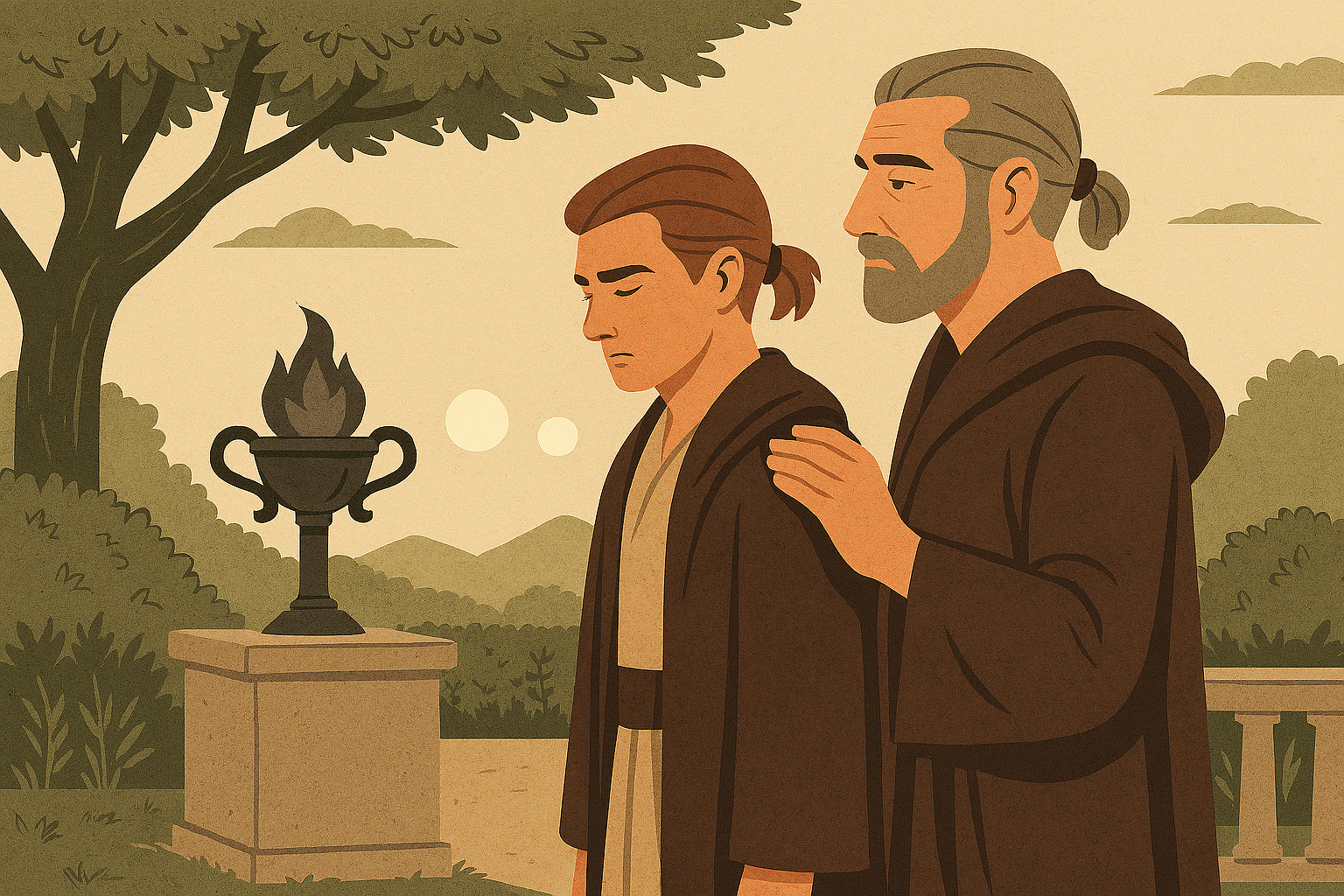
They moved along the garden path until they reached a stone pedestal. Upon it lay a torch—its flame long extinguished.
“Do you know the story of the Fallen Torch?” the Master asked.
The Padawan shook his head.
“Long ago,” the Master said, “a guardian was entrusted to carry a torch across the mountains to light the signal fires. But halfway through the journey, he grew careless. The flame died.”
The Master touched the cold metal.
“A traveler found him panicking beside the road. To save the mission, the traveler relit the torch from his own fire and carried it the rest of the way.”
The Padawan nodded. “A noble act.”
“Indeed,” the Master said. “But when the guardian returned home, he told the elders that the traveler had stolen his duty, interfered with his task, and caused the flame to falter.”
The Padawan’s eyes widened. “But that is not true.”
“No,” the Master said. “But truth is often the first casualty when pride is wounded.”
The Padawan clenched his fists. “So what did the traveler do?”
The Master smiled softly. “He did not argue. He did not defend. He simply said:
‘I carried the flame because it needed to be carried.’
And the elders, who were not fools, saw clearly who had acted with honor.”
The Padawan exhaled slowly. “So the guardian’s lies did not prevail.”
“Lies rarely do,” the Master said. “But they can cause much noise before they fade.”
He placed a hand on the Padawan’s shoulder.
“When someone drops their torch, they may blame the one who picks it up. Not because you did wrong, but because your action reveals their inaction. Blame is the shield of the unprepared.”
The Padawan lowered his head. “Then what should I do, Master?”
“Stand in the light,” the Master said. “Speak only the truth. Do not carry the burden of another’s failure. A torch dropped is a torch dropped. A torch carried is a torch carried. Let the elders—and the Force—see the difference.”
The Padawan breathed deeply, the storm inside him quieting.
“I understand,” he said. “I will carry only what is mine.”
“Good,” the Master replied. “For the weight of another’s blame is heavier than any torch.”
The Professional Padawan | Leadership Integrity Under Blame
A young professional often finds themselves in situations where they step in to prevent a project from failing, only to be blamed by the very person who dropped the ball. This parable speaks directly to that experience. It reminds the modern Padawan that when someone feels exposed by their own inaction, they may rewrite the story to protect their pride. Blame becomes a shield, not a reflection of truth. In the workplace, this can look like a colleague accusing you of overstepping, interfering, or causing confusion—when in reality, you were the one who kept the mission moving.
The Master’s lesson reframes the situation: integrity isn’t proven by arguing, defending, or matching someone else’s insecurity. It’s demonstrated through calm clarity. A professional Padawan learns that stepping in to help is not the problem; carrying the emotional burden of someone else’s failure is. The traveler in the parable didn’t waste energy fighting accusations. He simply stated the truth of his actions and trusted that those with perspective would see what really happened. In business, this translates to documenting your work, communicating transparently, and letting your consistent behavior speak louder than someone else’s panic.
Ultimately, the parable teaches that responsibility is not just about doing the work—it’s about knowing which burdens are yours to carry. A rising leader must learn to release the weight of misplaced blame and stand confidently in their integrity. When you act with honor, the “elders”—your leadership, your clients, your team—will recognize it. And when someone else drops their torch, you can choose to help without accepting the guilt they try to hand you.